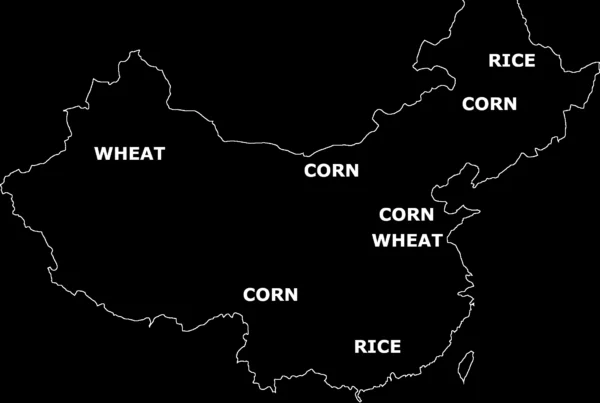

On a clear morning in Hebei province a few years ago, I walked through a small village’s wheat fields, marveling at how the golden stalks stretched out like an endless sea. Farmers conversed about the government’s latest incentives and the promise of a bountiful harvest. This fusion of traditional agriculture with an ambitious national agenda captures the essence of China’s unwavering commitment to feeding more than 1.4 billion people.
Food security has always been a pillar of China’s national policy. From ancient dynasties grappling with famines to modern leaders confronting climate change and shifting global markets, the nation’s approach to sustaining its vast population has continually adapted. Today, government priorities stretch across self-sufficiency targets, technological innovation, international trade agreements, and strategic overseas investments. This comprehensive view not only addresses domestic imperatives but also influences global food supply chains and commodity prices.
Key Challenges in China’s Food Security
Among the most pressing challenges China faces is the scarcity of arable land relative to its population size. The country maintains a “red line” policy.
- The Red Line Policy: At least 120 million hectares of farmland to remain dedicated to agricultural use.
Rapid urbanization and infrastructure growth, however, put continuous pressure on this finite resource. According to data from the Ministry of Natural Resources, the total arable land hovered dangerously close to the 120 million-hectare threshold in 2020, underscoring the delicate balance between development and agricultural preservation.
Beyond land constraints, soil degradation, and water scarcity have emerged as critical threats. Intensive chemical fertilizer use, monocropping, and industrial pollution have undermined soil quality, particularly in northern provinces like Hebei and Shandong. Water shortages compound the problem: the North China Plain has experienced significant depletion of groundwater aquifers, while the massive South-to-North Water Diversion Project reflects the gravity of these shortages. Shifting rainfall patterns and extreme temperatures, driven by climate change, only heighten these concerns, as do droughts and salinity intrusions in coastal farmland.
Dependence on foreign commodities further complicates China’s pursuit of food security. Soybeans, a staple for both human consumption and livestock feed, remain the clearest example: approximately 80% of China’s demand is met through imports. Although this arrangement has largely satisfied China’s needs, geopolitics and international trade frictions—most notably disputes with the United States—continue to expose vulnerabilities in the nation’s supply chain.
Government Policies and Strategies
The Chinese government has developed a multifaceted framework to safeguard its food supply. The legal enshrinement of the red line for arable land is a prime example. Central and provincial authorities work in tandem to ensure compliance, often using performance evaluations that discourage local governments from reclassifying farmland for industrial or commercial use. This strict policy is part of broader agricultural planning guided by Five-Year Plans, which articulate clear objectives for modernizing and sustaining agricultural outputs. The 14th Five-Year Plan (2021–2025), for instance, places particular emphasis on:
- Building high-standard farmland
- Reducing rural-urban inequalities
- Promoting innovations that maximize yields while preserving resources.
Another major component of China’s strategy is seed security. Government-supported research institutes and private technology firms are investing in robust seed development programs, including genetic modification. Pilot programs for GM corn, soybeans, and rice aim to boost crop yields and reduce pesticide use, building on the country’s legacy in hybrid seed technology pioneered by scientists like Dr. Yuan Longping. Alongside seed research, significant subsidies help stabilize farmer incomes and ensure the cultivation of staple grains such as wheat, rice, and corn. These subsidies are augmented by rural revitalization initiatives designed to improve infrastructure, enhance digital connectivity, and incentivize educated youth to participate in modern farming.
China also places considerable emphasis on strategic stockpiling. The state maintains substantial reserves of rice, wheat, and corn as a buffer against fluctuations in global markets. When combined with targeted subsidies, these stockpiles can mitigate price volatility for local consumers and temper the impact of trade tensions on domestic food supplies.
Technology and Innovation in Agriculture
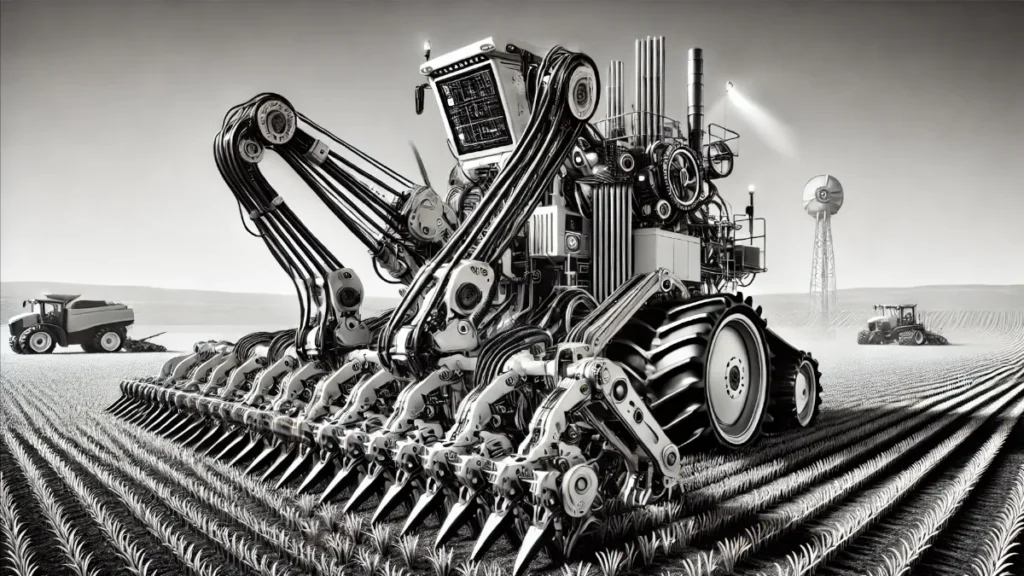
Technological advancement plays a pivotal role in China’s quest for self-sufficiency. Precision farming, bolstered by satellite imagery, drone surveillance, and IoT sensors, is accelerating yields in pilot projects across the country. By using real-time data to gauge soil and crop health, farmers can optimize fertilizer application, deploy targeted pest control measures, and streamline irrigation systems. In many cases, these innovations reduce labor requirements, a crucial consideration in regions where rural populations are shrinking due to urban migration.
Vertical farming and advanced greenhouse complexes are increasingly common in major cities like Shanghai and Beijing. Equipped with LED lighting systems that emit customized light spectrums, these facilities can produce leafy greens and vegetables more efficiently than traditional outdoor methods. Water-saving techniques such as hydroponics and aquaponics—where crops grow without soil and rely on nutrient-rich water—further support China’s sustainability goals. Parallel to these efforts, the government promotes organic farming zones and circular agriculture, where agricultural by-products are recycled into organic fertilizers and bioenergy, thus lessening environmental impact.
Global Trade and Imports
China’s role in international food markets is extensive. It is one of the world’s largest importers of soybeans, corn, and other feed grains, ensuring a steady supply of feedstock for livestock operations. The volume of soybean imports alone exceeds 90 million metric tons annually, with Brazil and the United States functioning as China’s primary partners. Trade frictions—particularly with the United States—have spurred Beijing to diversify its sources, pivoting more heavily toward Brazil and, to a lesser extent, Argentina. Russia has also gained importance as a wheat supplier, aided by improving agricultural yields in Siberia and the country’s eagerness to expand its share of the Chinese market.
China’s trade policy in the agricultural sphere often mirrors broader geopolitical relationships. It is not uncommon for Beijing to adjust tariffs or purchasing patterns in response to tensions or shifts in diplomatic ties. By dispersing its commodity acquisitions across multiple countries, China hopes to limit disruptions that could stem from any single-source dependency.
Strategic Investments Abroad

Significant agricultural investments beyond China’s borders illustrate another dimension of its food security strategy. Under the Belt and Road Initiative (BRI), Beijing has pledged to develop infrastructure that can facilitate easier movement of goods across Asia, Africa, and Europe. These upgrades include railways, ports, and roads that streamline the delivery of grain, meat, and produce.
China’s overseas farming projects and land acquisitions complement these infrastructural developments. Partnerships in Africa, for example, aim to increase productivity through technology sharing and training programs, sometimes accompanied by large-scale farming operations. Similarly, in Latin America and Southeast Asia, Chinese companies have invested in soybean, cattle, and rice production. Critics worry that such projects might displace local farmers or lead to undue reliance on Chinese capital, but others see potential benefits in the form of improved agricultural capacity and stronger global food supply chains.
Impact on Global Markets
China’s sheer demand for grains, oilseeds, and meat exerts a considerable influence on global prices. Even slight policy adjustments—such as relaxing import quotas or imposing a new set of tariffs—can send reverberations throughout commodity markets. The country’s stockpiling practices also affect international availability, as China can purchase or withhold large volumes of staples like wheat and corn, thereby influencing supply dynamics elsewhere.
Supply chain complexity is another byproduct of China’s evolving agricultural landscape. Multinational agribusinesses tailor seeds, crops, and products to meet stringent Chinese standards, from specific genetic traits in soybeans to packaging and labeling requirements. Meanwhile, countries that have traditionally relied on the U.S. for agricultural imports now face growing competition from Chinese buyers, which alters trade flows and shifts leverage among exporting nations.
Future Outlook and Policy Recommendations
Looking ahead, China will likely redouble its efforts to strengthen domestic production through “sustainable intensification.” This approach involves raising yields without exacerbating environmental pressures, partly by integrating climate-resilient seeds and water-saving irrigation methods. Continuous investment in AI and automation is also probable, as robotics and data analytics can offset labor shortages and improve precision in both crop cultivation and harvesting.
Further diversification of import sources is another logical step. By forging new trade partnerships and deepening existing ones, China spreads geopolitical and climate-related risks across multiple exporters. This approach includes not only bolstering deals with Brazil or Russia but also exploring opportunities in emerging agricultural economies.
Collaboration beyond China’s borders is critical as well. Joint research projects, bilateral partnerships, and global food security initiatives can foster innovation in crop genetics and sustainable farming. Given its own experiences with resource constraints, China can serve as a model or a cautionary tale for other countries seeking to balance productivity and sustainability. Mutual learning will be increasingly valuable in an era of unpredictable climate events and shifting trade policies.
Conclusion
China’s ever-adapting food security strategy is more than just a national concern; it is a driving force in global agricultural markets. Centralized policies that emphasize arable land protection, agricultural modernization, and strategic overseas ventures interact with cutting-edge technological solutions and carefully orchestrated trade relationships. As a result, the decisions made by Chinese policymakers reverberate throughout the world, influencing commodity prices, shaping supply chains, and affecting the livelihoods of millions of farmers and consumers.
Like the wheat fields in Hebei that captured my attention years ago, China’s agricultural sector stands at the crossroads of time-honored tradition and groundbreaking innovation. Its success or failure in navigating challenges—ranging from climate change to international diplomacy—will undoubtedly leave a lasting imprint on the global quest for food security.