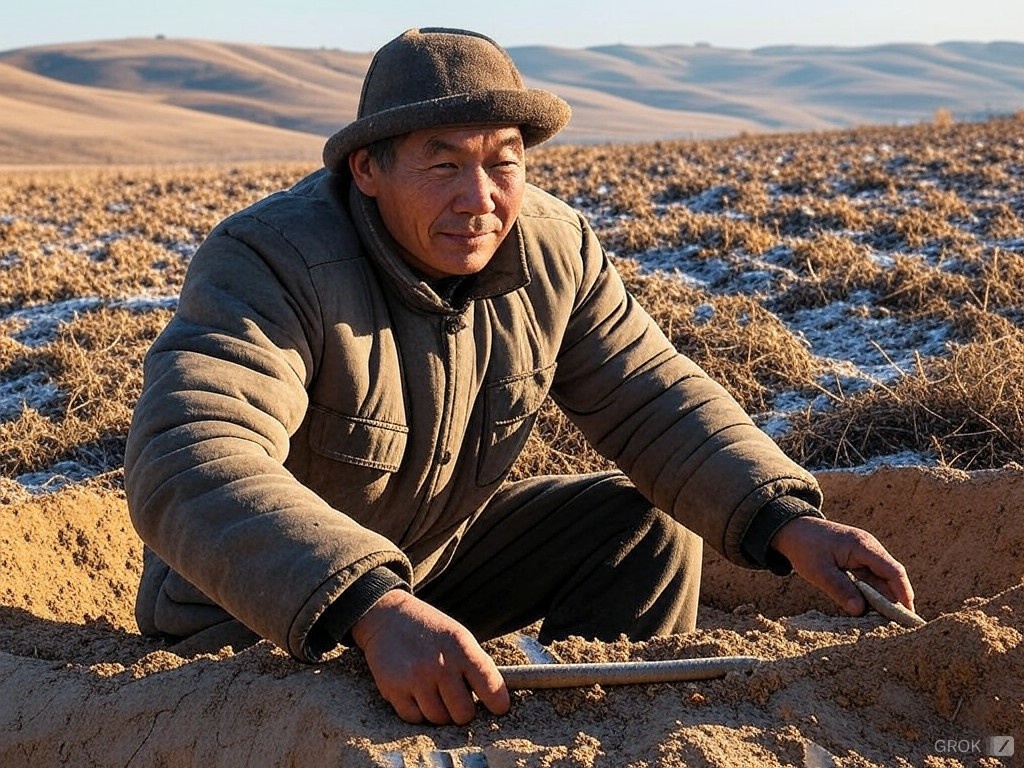
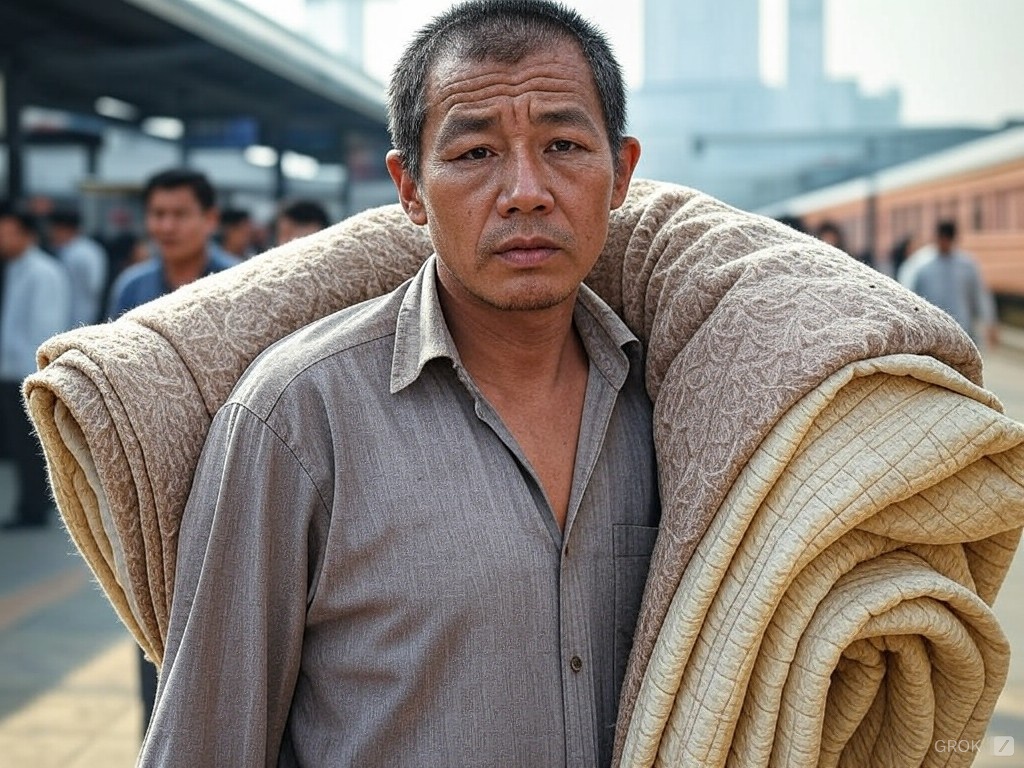
Looking out the window of the slow train to Tianjin, the fields stretched out in all directions, blanketed by frost. Farmers, bent at the waist, moved deliberately across the frozen earth, their breath visible in the air. It was a scene of quiet persistence, the land demanding attention even in the harshest of seasons. Inside the train, families of migrant workers carried pieces of their homes wrapped in bedding to new homes in the cities. The view outside the window and the people around me felt inseparable—the land shaped their livelihoods, their struggles, and their sense of identity. This connection between people and land was something I could see, but only slowly began to understand.
Today, those same rural landscapes are at the heart of what President Xi Jinping calls the “San Nong” Problems.
“San Nong” (三农), meaning “three agricultures”, is shorthand for:
- Agriculture Industry (农业),
- Agricultural Villages (农村),
- Agricultural Farmers (农民),
Three interlinked challenges that Xi has consistently emphasised as critical to China’s national development. For those unfamiliar with China, the San Nong issues may sound like a typical bureaucratic slogan, but their impact runs deep—in ways that are instructive, not just for China-watchers, but also for anyone in the global agriculture industry.
The Rural-Urban Divide: Why San Nong Matters
To understand San Nong, you must first appreciate the stark urban-rural divide that has shaped modern China. Over the past 40 years, China’s economic boom, like its glass and steel skylines, has been built on the backs of migrant labour—farmers leaving their villages to work in factories or on construction sites. The megacities like Tianjin, Shenzhen, and Chongqing became increasingly crowded while the villages grew empty. Cities glittered with wealth and progress, and rural areas lagged behind, with underfunded schools, basic healthcare, and ageing infrastructure.
This is where San Nong comes in. Xi Jinping’s focus on addressing San Nong issues aims to modernise agriculture, revitalise rural areas, and improve the lives of farmers. It’s a response to two pressing challenges: ensuring food security for China’s massive population and reducing economic inequality that threatens social stability. I’ve seen firsthand how critical these issues are. On one trip to Yunnan Province, a farmer proudly showed me his small plot of land, where he had recently switched to growing high-yield rice varieties promoted by local officials. “It’s better now,” he told me. “We make more money, and the young people are starting to come back.”
What Are the Three San Nong Problems?
- Agriculture: In many regions, outdated farming practices and low mechanisation rates have kept yields far below potential, leaving farmers struggling to sustain livelihoods.
- Rural Areas: Poor infrastructure, such as unpaved roads and limited access to healthcare or education, has contributed to rural stagnation and migration to cities.
- Farmers: The conditions and lower earnings of the agricultural industry mean fewer young workers are willing to return to the countryside, creating labour shortages and further hindering long-term development.
The Five Dimensions of Rural Revitalization
At the heart of Xi Jinping’s response to the San Nong issues is the Rural Revitalization Strategy (乡村振兴战略), a multi-faceted plan announced in 2017. The strategy focuses on five areas:
- Industrial Revitalization: Upgrading agriculture through technology, mechanisation, and industrial-scale farming. Gone are the days of subsistence farming; today, China encourages the development of agricultural cooperatives and rural enterprises. A recent announcement made headlines in Shanghai, where the government plans to establish 1,333 hectares of fully automated farmland 1,333 hectares https://www.scmp.com/economy/china-economy/article/3274342/shanghai-angles-acres-drone-grown-crops-automated-agriculture-plan
- Talent Revitalization: To lure young people back to rural areas, China offers incentives like subsidies, training programs, and opportunities for entrepreneurship. This is crucial because ageing populations are one of the biggest challenges facing rural communities. In many villages, only the elderly remain, their children long gone to the cities.
- Cultural Revitalization: China’s rural areas are rich with traditions, but they risk being overshadowed by modernization. Efforts to address San Nong include preserving folk art, festivals, and rural heritage while fostering a renewed sense of pride in village life.
- Ecological Revitalization: Environmental sustainability is another cornerstone. Initiatives promote soil health, water conservation, and pollution reduction. In Beijing, the WeChat groups that ex-pats frequented were filled with organic options and day trips to see the ecological farms set up beyond the city borders, like this one https://www.dcz-china.org/2024/03/11/german-experts-visit-organic-farm-near-beijing/ . They bring in better wages for the farmers and a younger, more educated population into the farms and practices that left the land better off for the future.
- Organizational Revitalization: This involves strengthening rural governance and local Communist Party leadership. Effective grassroots governance ensures that policies are implemented efficiently and that rural voices are heard.
Food Security and Self-Sufficiency
“中国人要把饭碗端在自己手里”
President Xi Jing Ping
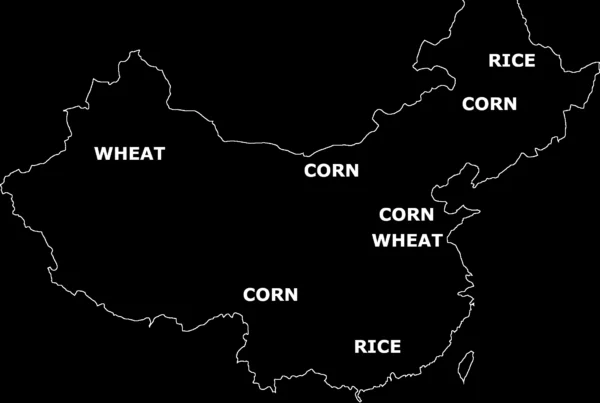
Food security is perhaps the most pragmatic reason behind addressing San Nong issues. China is the world’s most populous country (depending on who you ask), and ensuring a stable food supply is a matter of national security. Xi Jinping has often spoken about the need for China to “keep its rice bowl firmly in its own hands”. To achieve this, the government protects arable land, invests heavily in agricultural technology, and promotes the adoption of high-yield and climate-resilient crops.
For Western businesses in the agriculture sector, this emphasis on self-sufficiency means that China is a market driven by both necessity and opportunity. Technologies that enhance productivity—from smart farming solutions to sustainable fertilizers—are highly sought after (at least until China can produce these solutions themselves.)
What This Means for the World
China’s focus on addressing San Nong issues carries implications well beyond its borders. For global agricultural exporters, China remains a huge market. At the same time, its drive for self-sufficiency can pose challenges. For example, China’s massive soybean imports—mainly from Brazil and the U.S.—have been central to global trade dynamics. Yet, as domestic production ramps up, international suppliers will need to adapt.
Efforts to address San Nong also offer lessons for other countries. The emphasis on revitalizing rural areas through technology, environmental sustainability, and grassroots governance could serve as a model for regions struggling with rural decline.
A Changing Rural China
Over the years, I’ve watched the transformation of China’s countryside up close. Villages that once seemed locked in time now boast paved roads, internet access, and even e-commerce hubs where farmers sell their produce directly to consumers. Yet challenges remain. The urban-rural divide is narrowing, but it hasn’t disappeared. Many rural areas still grapple with ageing populations, limited healthcare, and unequal educational opportunities.
Xi Jinping’s response to the San Nong issues is ambitious, but it is also deeply pragmatic. For China, agriculture is not just an industry; it’s a matter of national pride, stability, and survival. For anyone in the West hoping to do business in China’s agricultural sector, understanding these issues is key to understanding where the country is headed.
The slow train to Tianjin lingers in my memory, not for its speed or comfort, but for what it revealed about rural China. The land, the people, and the train itself were all part of a single story: a countryside in motion, caught between the weight of history and the pull of progress.
Today, rural China is still on that journey, guided by the steady hand of Xi Jinping and policies aimed at solving the San Nong issues. Yet as I think back to that journey, the lesson remains clear: to understand China, you must first understand its farmers.