Kathmandu, a city of ancient temples and bustling chaos, had been my temporary home after an eventful trek to Everest Base Camp. My legs still ached from the climb, my mind still buzzing from the thin, high-altitude air, but there was something restless inside me. Perhaps it was the frustration of being trapped in a city running on fumes—literally. It was 2015, and only a couple of months after the earthquake, Nepal was in the grip of a fuel crisis, a byproduct of a diplomatic spat with neighboring India, and the capital had ground to a standstill.
Walking through the streets of Kathmandu, I passed queues of cars and taxis that hadn’t moved in days, their drivers dozing under tarpaulins, waiting for the scent of petrol that might never come. The usual vibrancy of Thamel, the traveler’s hub, was dimmed, its streets quieter, its energy stifled. Even my refuge, a charming Tibetan bookshop in the town center, where I had spent hours thumbing through the pages of Buddhist philosophy and adventure memoirs, could only provide so much distraction. I needed to get out. And if I was to escape Kathmandu’s gridlocked desperation, there seemed only one fitting place to go: Lumbini, the birthplace of the Buddha.
I booked a flight south. It was only an hour or so, a short journey, but one that came with its own peculiarities—namely, the ticket pricing system. One price for Nepalese, another for Indians, and yet another, significantly higher, for the ever-elusive category of “other foreigners,” into which I firmly fell. With little choice, I paid my fare, boarded the plane, and settled in for the ride.
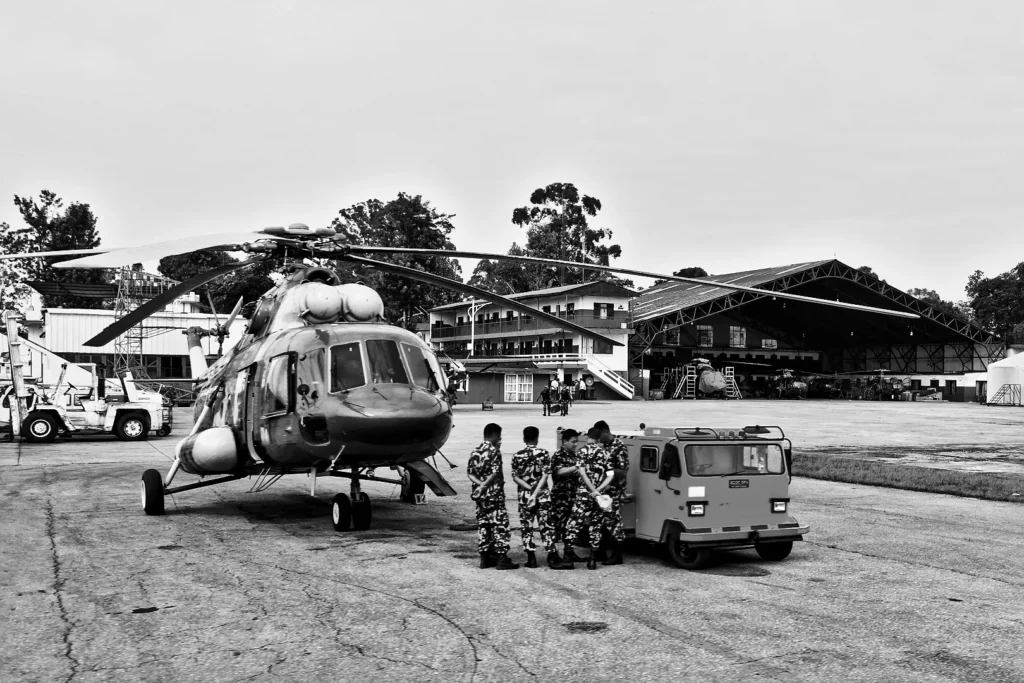
The moment I stepped onto the tarmac at Lumbini’s small airport, I knew I had arrived somewhere different. The heat was immediate, a heavy, wet cloak that wrapped around me. The terminal was empty, it was oddly large for how few people I saw, something felt off. As I gathered my bag and made my way outside, I was informed that the south of Nepal was no longer considered safe. The Nepalese military had taken over the airport, an ominous presence that only added to the sense of unease. I’d soon start seeing their makeshift barriers and checkpoints all over. I was advised, in no uncertain terms, to get moving.
Stepping into the parking lot, I quickly realized I was the main event of the day. Ours had been the only flight, and as one of just a handful of passengers, I was suddenly the center of attention. A swarm of rickshaw drivers descended, each shouting greetings, prices, and promises of the best ride in town. Their voices overlapped, a cacophony of desperation and opportunity. They all knew the truth: I was their only chance for a fare that day.
Having done my research—or so I thought—I confidently haggled a driver down to a fraction of his initial asking price. Google had told me that Lumbini was a mere 20 minutes from the airport. Twenty minutes in a rickshaw? Easy.
My driver, a wiry man with dark brown legs hardened by years of pedaling, nodded with a wide grin, accepted my price, and gestured for me to hop on. With one last glance at the machine-gun-clad soldiers lingering by the airport entrance, I climbed into the rickshaw, and off we went.
The road stretched ahead, cutting through a flat landscape untouched by time. Young girls bathed nude in a roadside stream, their laughter carrying on the breeze, while water buffalo waded lazily through the shallows. Chickens darted across the road, unfazed by the occasional goat wandering into their path. It was picturesque, peaceful—until I checked my watch.
We had been moving for 45 minutes.
My driver was now drenched in sweat; his shiny back blinded me, reflecting the sun. He kept pushing the pedals with a determined rhythm, but we had slowed to a crawl. The road had begun to slope upward, and despite his best efforts, we were moving at a pace that felt slower than walking. I felt a pang of guilt. I offered to hop off and walk the hill, but he shook his head firmly and waved me back down. His pride, his work, his dignity—he would see this journey through.
Another hour passed.
And my guilt deepened. I realized, with a sinking feeling, that my “20-minute” estimate had been based on a car ride, not a rickshaw. The man had accepted a fee that was certainly insultingly low, and here he was, straining against the heat, pushing me toward my destination with unwavering determination. I had haggled him down so hard that I had effectively robbed him of what should have been a fair wage.
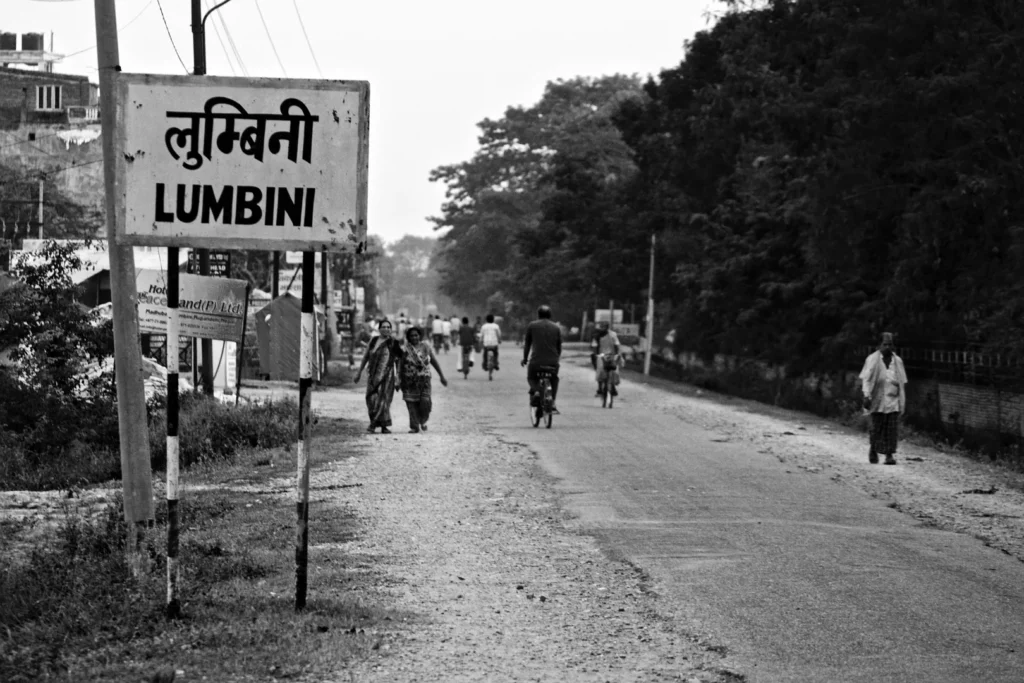
By the time we arrived in Lumbini, more than two hours after setting off, I was drenched in sweat—but nowhere near as much as my driver. As I climbed out of the rickshaw, I turned to him, offered my apologies, and handed him the full fare he had initially requested. His tired face broke into a wide, knowing smile. He hadn’t complained once.
With a nod of thanks, I turned and walked down the dusty road that split this small village in two, my legs stiff from sitting so long, my mind still replaying the ride. I hadn’t booked anywhere to stay, but I figured someone would take me in. They did. The first building I entered led me to a guesthouse of sorts, a place that looked like it had changed little since the days of the Buddha himself.
The courtyard was wide, the rooms basic. No air conditioning, but I wasn’t expecting any. I tossed my bag on the bed, lifted the sheets, and stopped.
Small spots of blood. Bed bugs.
I sighed, too tired to be fazed. I had come this far. I had made it to Lumbini, the sacred birthplace of the Buddha. The discomforts—sweat, exhaustion, bed bugs—were just part of the journey. Tomorrow would be an adventure. But that, I told myself, was a story for another day.
For now, I closed my eyes and let sleep take me as I faded into the silent, warm night.