China had been my home for over fifteen years. I had trained in Kung Fu for most of my life, studied under great masters, and even learned from the formidable Shaolin Monk Shi Yanzi in England. And yet, despite all of this, one glaring omission remained: I had never been to the Shaolin Temple. It was the birthplace of my beloved art, a place I had revered since childhood, and yet somehow, in the whirlwind of daily life, I had never made the pilgrimage.
It was my friend Alex who finally pushed me into action. “We’re going,” he said. “No more excuses.”
And so, we found ourselves at Beijing Railway Station, that grand, chaotic portal to the rest of China. The usual sea of travelers bustled in every direction, each person with their own mission, their own journey. I ordered a coffee from Starbucks, the modern ritual before any long train ride, and walked off to buy our tickets. We had opted for first-class seats—space to stretch out, to relax, to prepare. As we settled in, I pulled out my water bottle, carefully pouring my coffee inside before adding butter and shaking it. Keto life. The extra fat would keep me going, even through the grueling training ahead.
Zhengzhou was like any other modern Chinese city—dense, functional, a mixture of towering glass buildings and street food vendors selling steaming bowls of noodles and skewers of lamb. We took a taxi to our hotel, knowing that tomorrow, at long last, we would set foot in Dengfeng, home to the legendary Shaolin Temple.
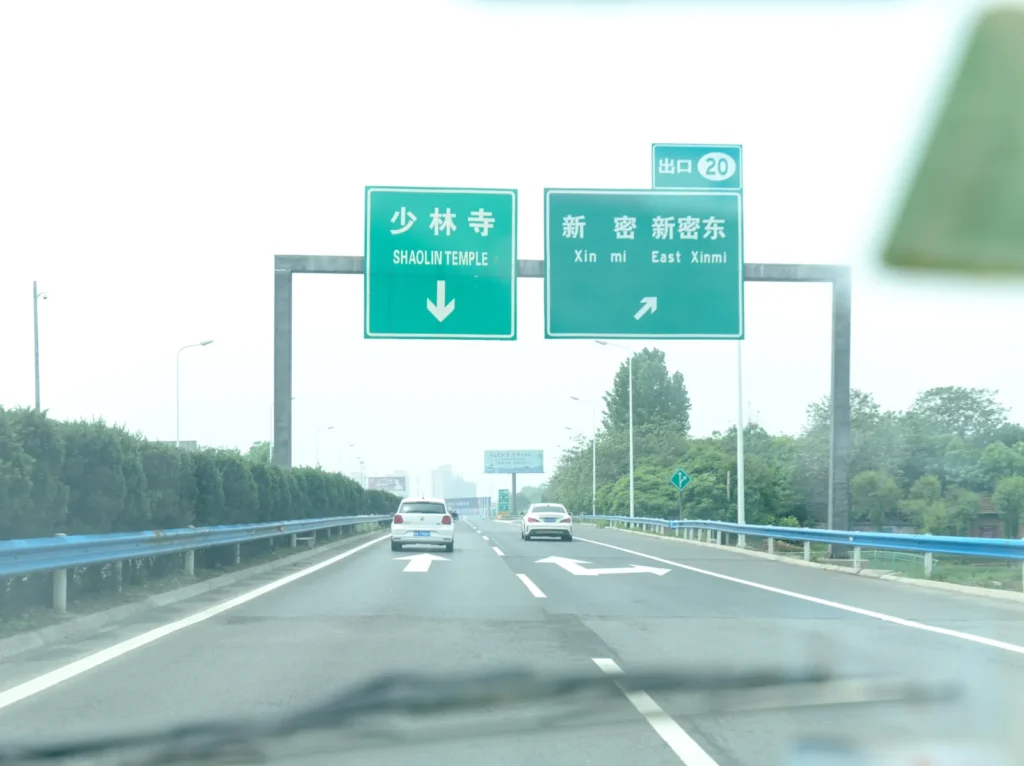
The drive to Dengfeng was surreal. Every road sign we passed that bore the name “Shaolin” sent an electric thrill through me. This was happening. My childhood dream was about to be realized. When we arrived at our villa, we dropped our bags and made straight for the temple.
The first thing we saw upon entering the complex was a group of monks running up the steps of the Song Mountain. Their movements were swift, effortless, bodies honed from years of discipline. Alex grinned at me. “We’re doing that tomorrow,” he said. I didn’t argue.
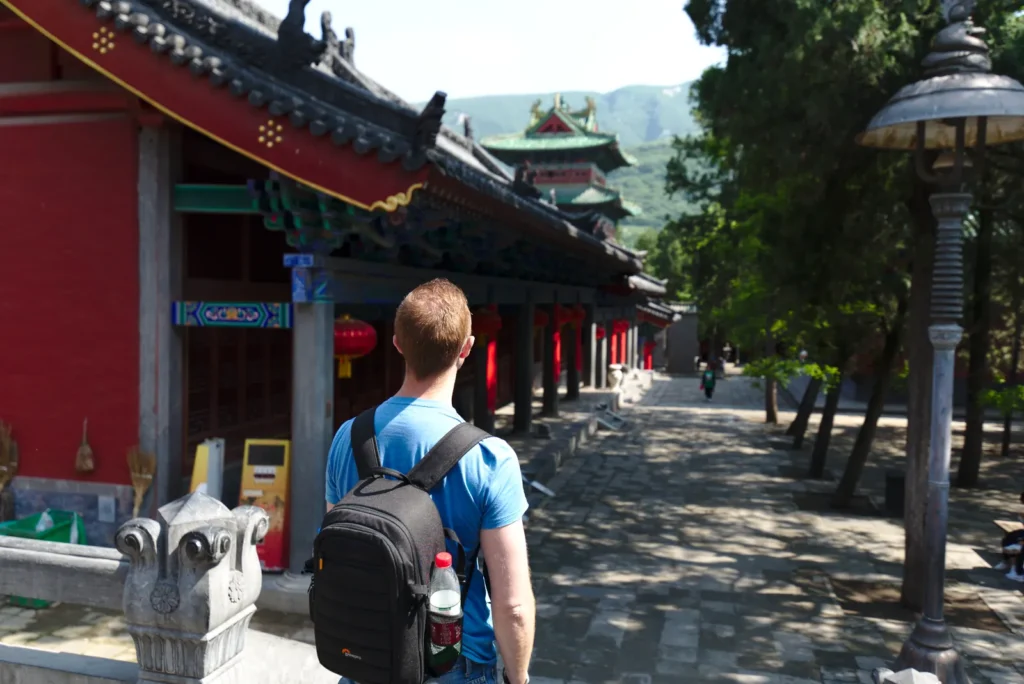
We spent the rest of the day soaking in the atmosphere, walking through the temple grounds, admiring the ancient courtyards and pagodas. This place, the very heart of Shaolin Kung Fu, was everything I had imagined and more. The history, the energy, the undeniable presence of something greater than ourselves—it was intoxicating.
The next morning, we arrived early, as promised. It was hot, the summer sun already bearing down on us as we stretched, tightened our laces, and began the ascent. Step after step, sweat pouring from our bodies, we pushed upward, determined to match the monks’ discipline. By the time we reached the top, we were drenched, breathless, but triumphant.
“That was just the warm-up,” Alex grinned. And so, our real training began.
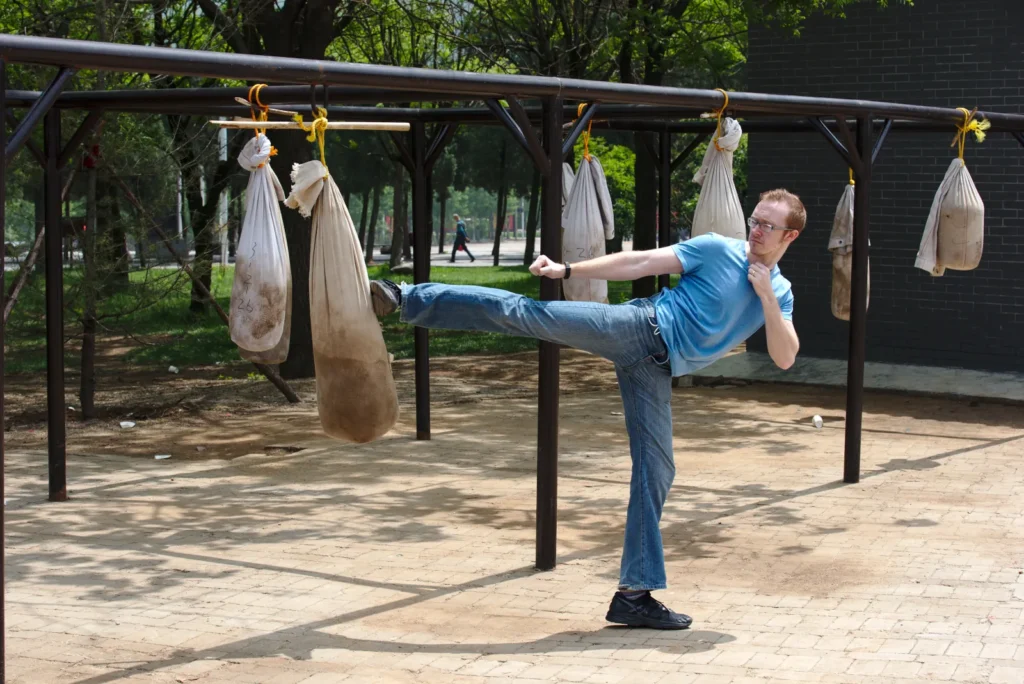
We were thrown into the world of Shaolin training with no time to hesitate. The monks taught us the foundational forms—Xiao Hong Quan, a fluid yet powerful sequence of strikes, and Tong Bei Quan, a style known for its long-range attacks and whipping motions. We drilled endlessly, perfecting every stance, every transition, every strike.
Weapons training was next. The staff, the quintessential Shaolin weapon, was our introduction. I had trained with the staff for years, but under the watchful eye of the monks, I realized how much refinement was still needed. We practiced Yi Gun Tou Er Gun, a form emphasizing speed and fluidity, our staffs slicing through the air as sweat dripped from our brows.
Then came the conditioning. This was where Shaolin training separated the strong from the weak. We slammed our arms into thick wooden posts to toughen them, our shins against stone pillars. The pain was sharp, but it was a familiar pain, the kind that promised strength. We stood in Ma Bu, the infamous horse stance, for what felt like eternity, our legs trembling, our bodies screaming to move. The monks barely flinched.
Day after day, we trained. Qigong breathing exercises, designed to cultivate inner energy, became part of our daily routine. We meditated, learning to channel our breath, to control our bodies with our minds. The connection between mind and muscle had never been clearer.
And then there were the acrobatics. The monks made them look effortless—flying kicks, butterfly twists, flipping from standing to ground and back again in one fluid motion. We, however, were far less graceful. But we persisted, pushing our bodies to their limits, absorbing the wisdom passed down for generations.
By the end of the week, we were bruised, exhausted, and yet—somehow—invigorated. We had lived the Shaolin way, if only for a brief moment. We had felt the intensity of their training, glimpsed the discipline required to truly master the art.
Returning home was a culture shock. The quiet routines of daily life felt oddly jarring. Sitting at my desk, answering emails, sipping coffee—how could this be the same world? The echoes of Shaolin were still in my bones, my muscles, my breath.
But that was the beauty of it. A piece of Shaolin never leaves you. It stays, etched into your movements, your thoughts, your approach to life itself.
I had finally made the pilgrimage. And though I had returned to my normal routine, something within me had changed. I carried Shaolin with me now—not just as a dream, but as a part of who I was.