China is a vast country with diverse geography, climates, and ecosystems, making its agricultural landscape incredibly varied. From the rice paddies of the south to the wheat fields of the north, the country’s agricultural output is vital for feeding its massive population and sustaining its economy. Having lived in China for 20 years and traveled extensively across its cities, villages, and farmlands, I’ve witnessed firsthand the striking differences between regions and the ingenuity of farmers adapting to their unique environments.
China’s agricultural system is not just a cornerstone of its economy but also a critical part of global food security. Its focus on self-sufficiency, technological advancements, and sustainability ensures its continued importance on the world stage. The following sections break down key aspects of Chinese agriculture, from its diverse regions to the staple crops and oil crops that fuel both domestic consumption and global trade. Through this lens, we can better understand the immense effort required to sustain such a large and diverse nation.
Major Agricultural Regions
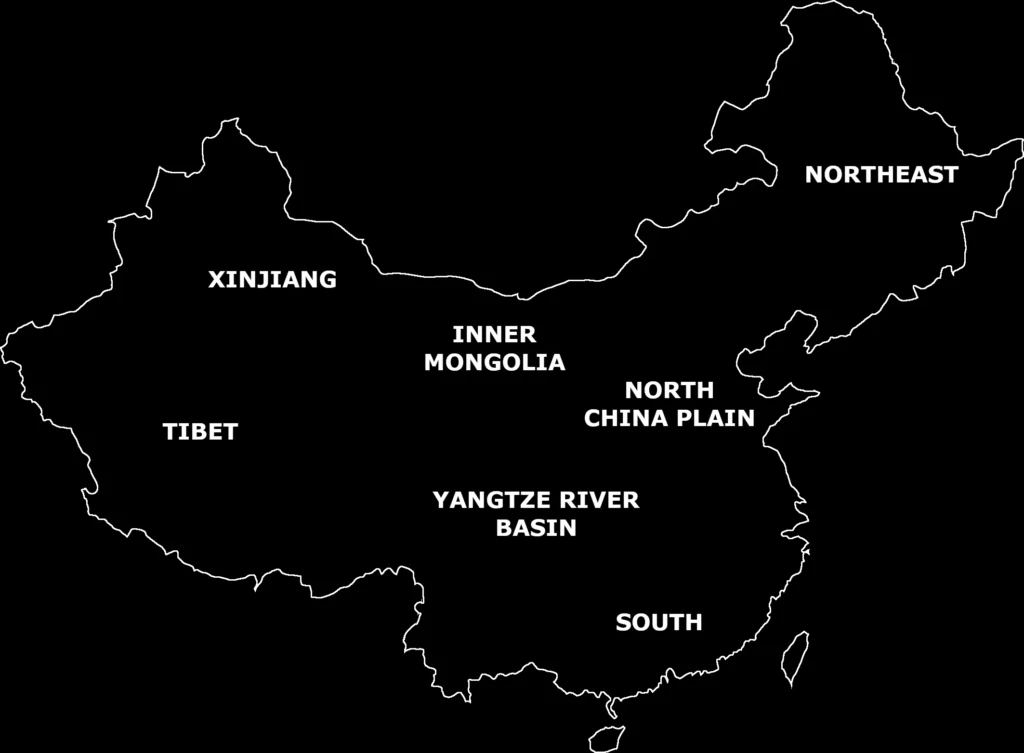
China’s vast and varied landscape has shaped distinct agricultural regions, each with its own strengths and specialties. These regions reflect the interplay of geography, climate, and farming traditions that define China’s agricultural identity. By examining these regions, we gain a clearer understanding of how the country maximizes its natural resources to sustain its population and economy. Use the map above and the information below to familiarize yourself with the agricultural regions of China.
Northeast (Heilongjiang, Jilin, Liaoning)
- Focuses on corn, soybeans, and dairy farming. Known as China’s “breadbasket” for staple crops, with cold winters and short growing seasons.
North China Plain (Hebei, Shandong, Henan)
- Specializes in wheat, corn, and cotton production. Features moderate rainfall and hot summers, making it a key grain-producing area.
South (Guangdong, Guangxi)
- Produces rice, tropical fruits (e.g., bananas, mangoes, lychees), and tea. Warm and humid climates support year-round farming and high-value export crops.
Tibet
- Focuses on yak farming, barley, and traditional grazing. Agriculture is adapted to high-altitude, cold, and dry conditions, supporting local communities.
Xinjiang
- Produces cotton, grapes, melons, and livestock. This dry, arid region relies heavily on irrigation and is a key producer of cotton and specialty crops like raisins and melons.
Inner Mongolia
- Specializes in livestock (sheep, cattle), dairy, and corn. Cold and semi-arid conditions support vast grazing lands, making it a major producer of dairy products and meat.
Yangtze River Basin (Sichuan, Hunan, Hubei, Jiangxi)
- Focuses on rice, fish farming, and rapeseed. Subtropical climates with abundant rainfall make this region critical for rice production in southern China.
China’s Staple Crops
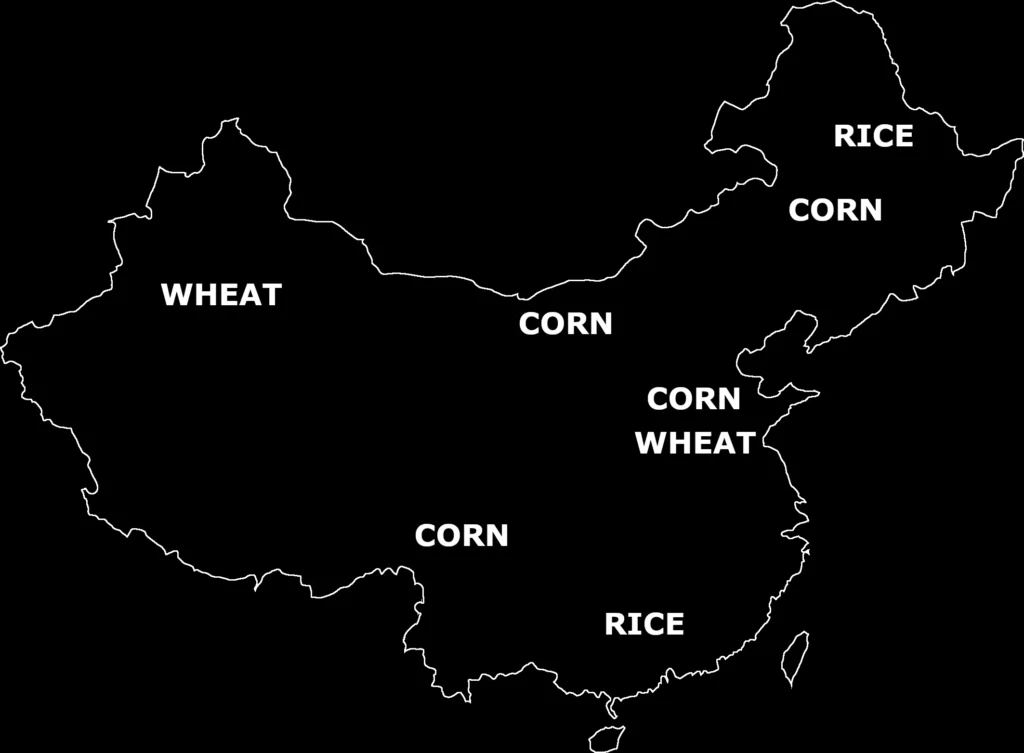
Staple crops form the foundation of China’s food supply, ensuring sustenance for over a billion people. These crops are deeply tied to the cultural and economic fabric of the nation, with each region optimizing its land to cultivate what grows best. This map offers a snapshot of these vital crops and their geographic distribution, showcasing the strategic alignment between agriculture and regional resources.
- RICE: China is the largest producer of rice globally, growing approximately 214 million tons annually, primarily in the Yangtze River Basin and southern provinces.
- WHEAT: The North China Plain & Xinjiang produces about 136 million tons of wheat annually, making it the second-most important grain.
- CORN: China’s Northeast region produces 273 million tons of corn, used for animal feed and industrial purposes.
China’s Oil Crops
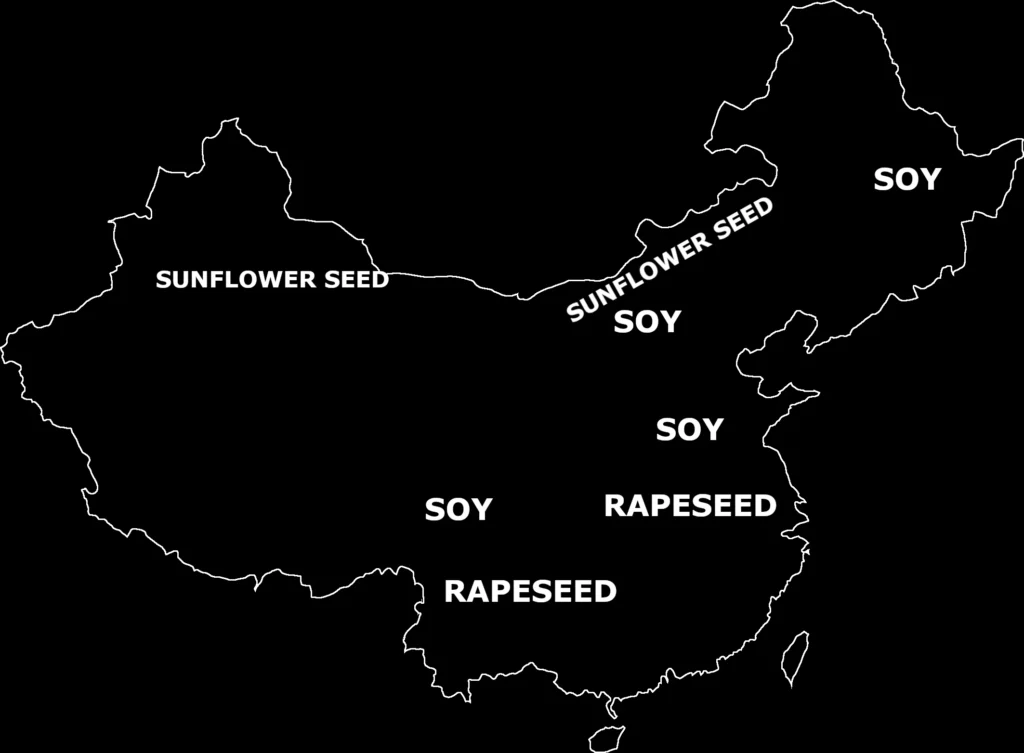
Oil crops are a vital part of China’s agricultural strategy, providing essential cooking oils and raw materials for industries. From traditional farming practices to modern innovations, these crops are cultivated across regions that utilize China’s climatic diversity. The map below highlights where oil crops are produced, offering a perspective on their role in supporting both domestic needs and economic growth.
Soybeans
China produces approximately 20 million tons of soybeans annually, primarily in Heilongjiang, but domestic production falls far short of demand. To meet its needs, China imports over 100 million tons annually, mainly from Brazil and the United States, making it the world’s largest soybean importer. These imports are vital for livestock feed and cooking oil production.
Rapeseed (Canola)
Rapeseed, also known as canola, is one of China’s most important oil crops, with production concentrated in provinces like Sichuan, Hubei, and Anhui. China is among the world’s top producers, but it still relies on imports to fill domestic gaps. Rapeseed oil is a key cooking oil in Chinese households, and its cultivation also supports the country’s biodiesel industry.
Sunflower Seeds
China produces sunflower seeds primarily in Inner Mongolia, Xinjiang, and parts of Heilongjiang. While sunflower seeds are commonly consumed as snacks domestically, a portion is processed into sunflower oil. However, much of the sunflower seed oil consumed in China is imported, with Ukraine and Russia being major suppliers.
Key Figures to Know
- China has about 120 million hectares of arable land or roughly 13% of its land area.
- China must feed over 1.4 billion people, nearly 20% of the world’s population.
- #1 in rice, wheat, and vegetable production.
- #2 in corn production (after the U.S.).
- The world’s largest importer of soybeans
In part two, we’ll look at China’s pastoral landscape.