Game · Godot 4
Dungkardo
A walkable Tibetan border town in 1903, built in Godot 4.
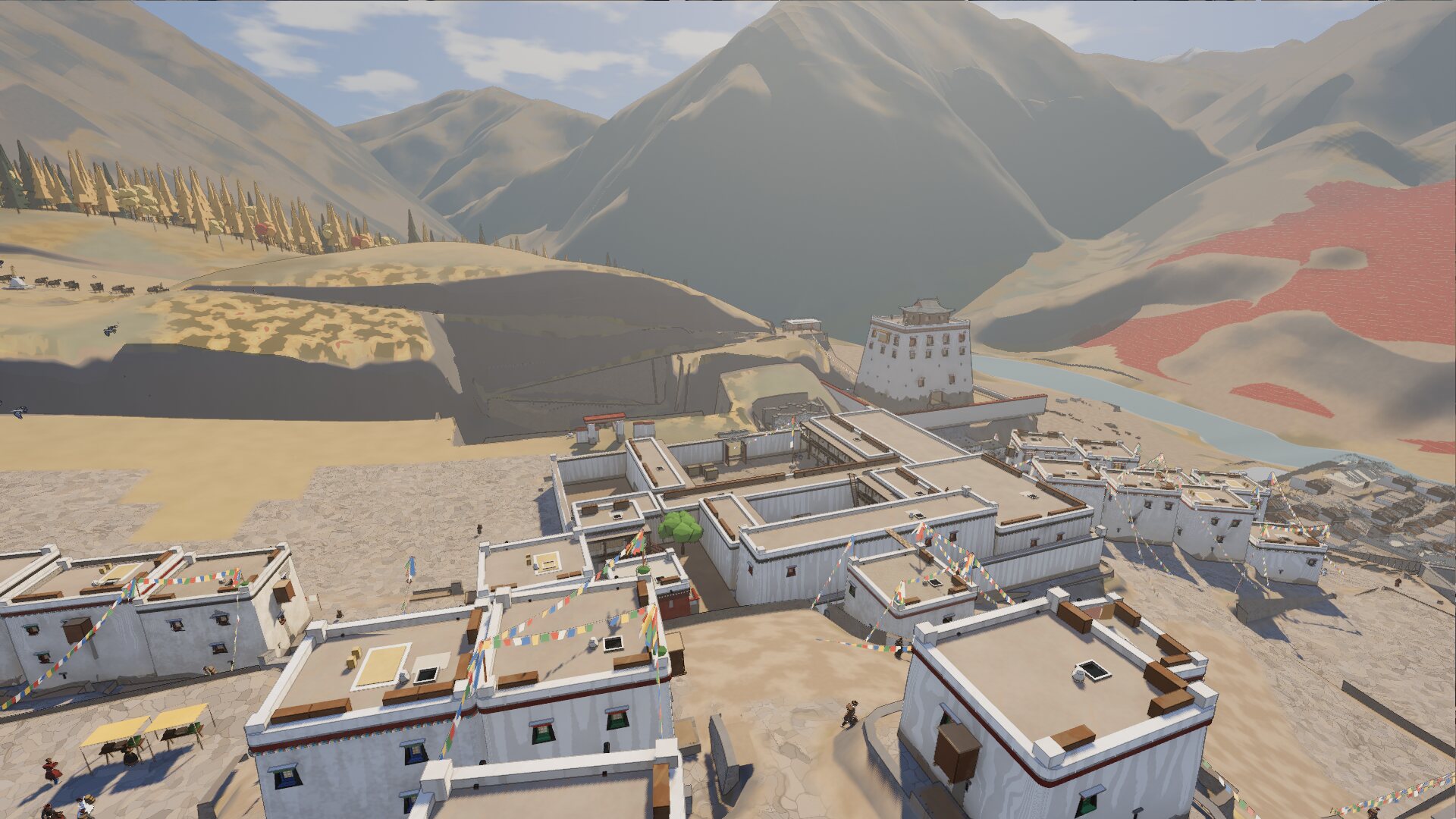
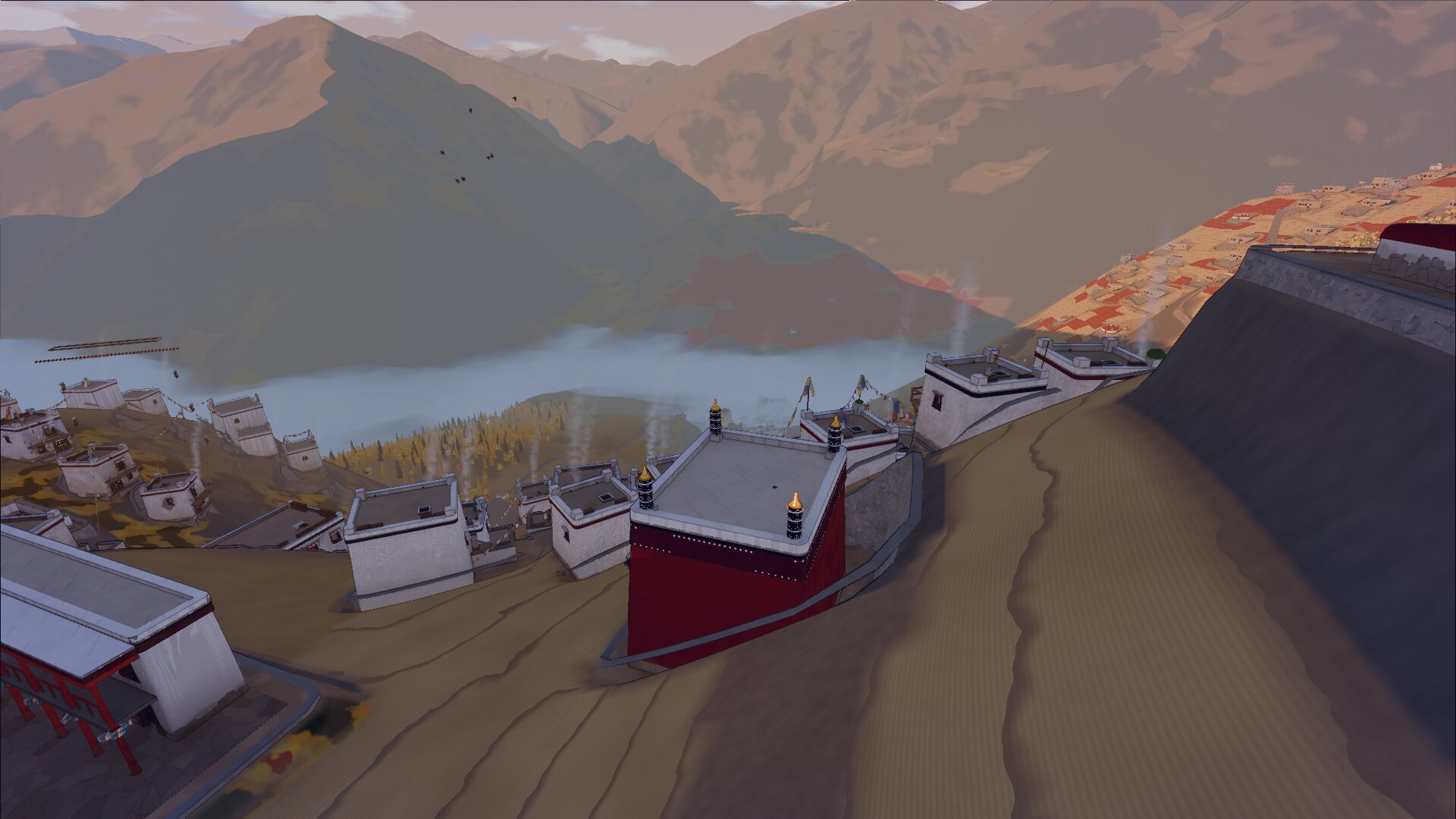
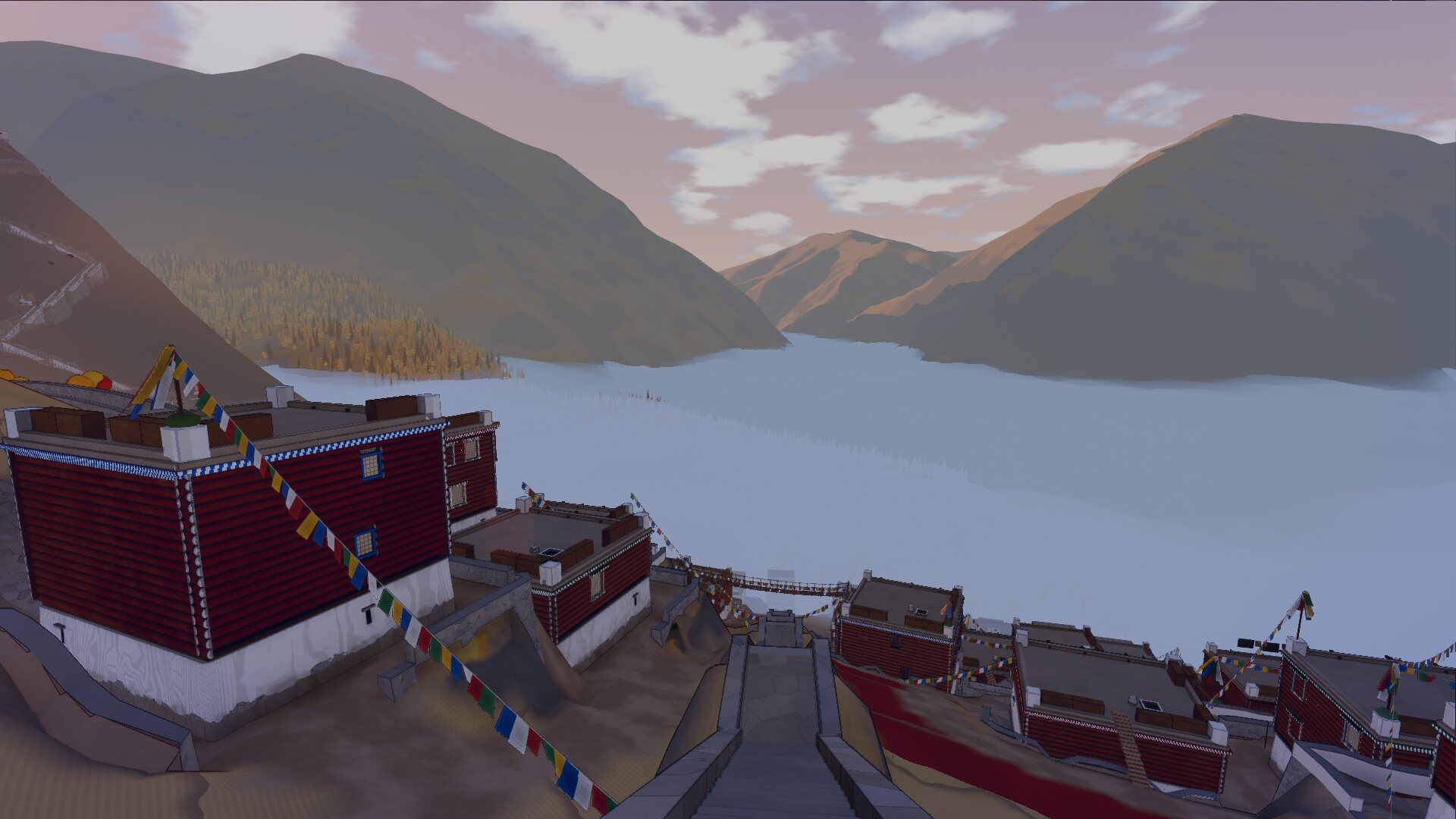
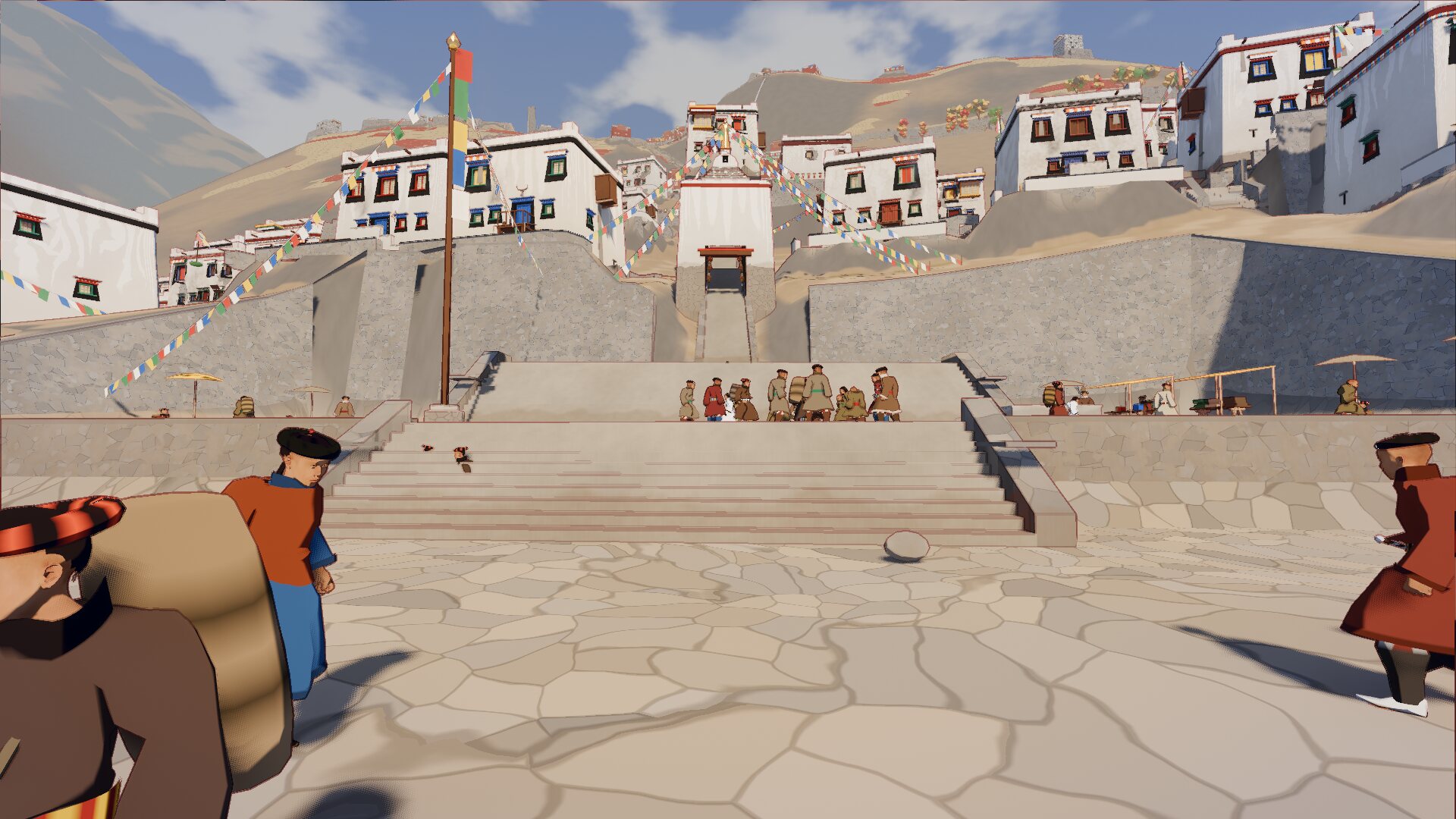
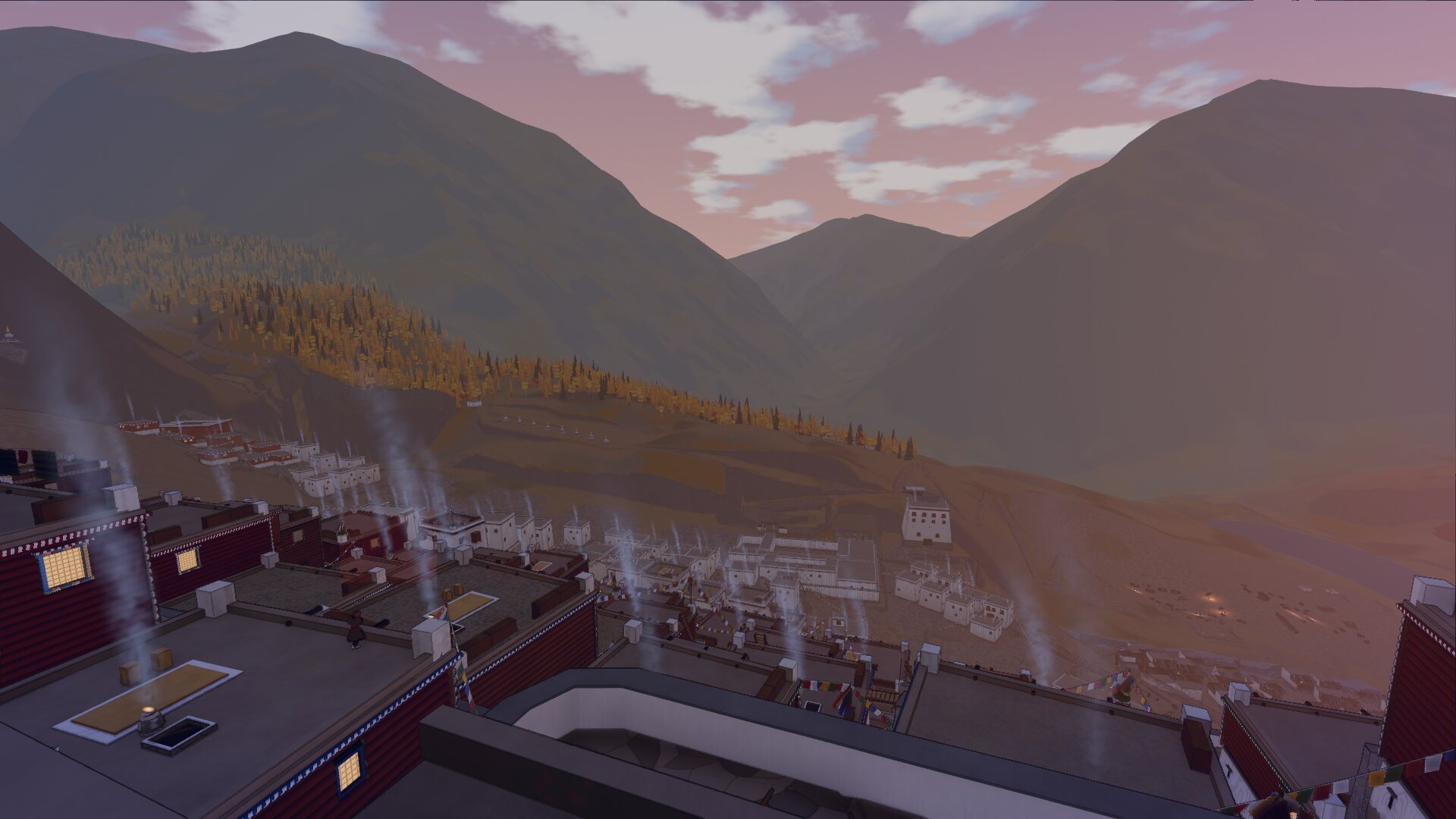
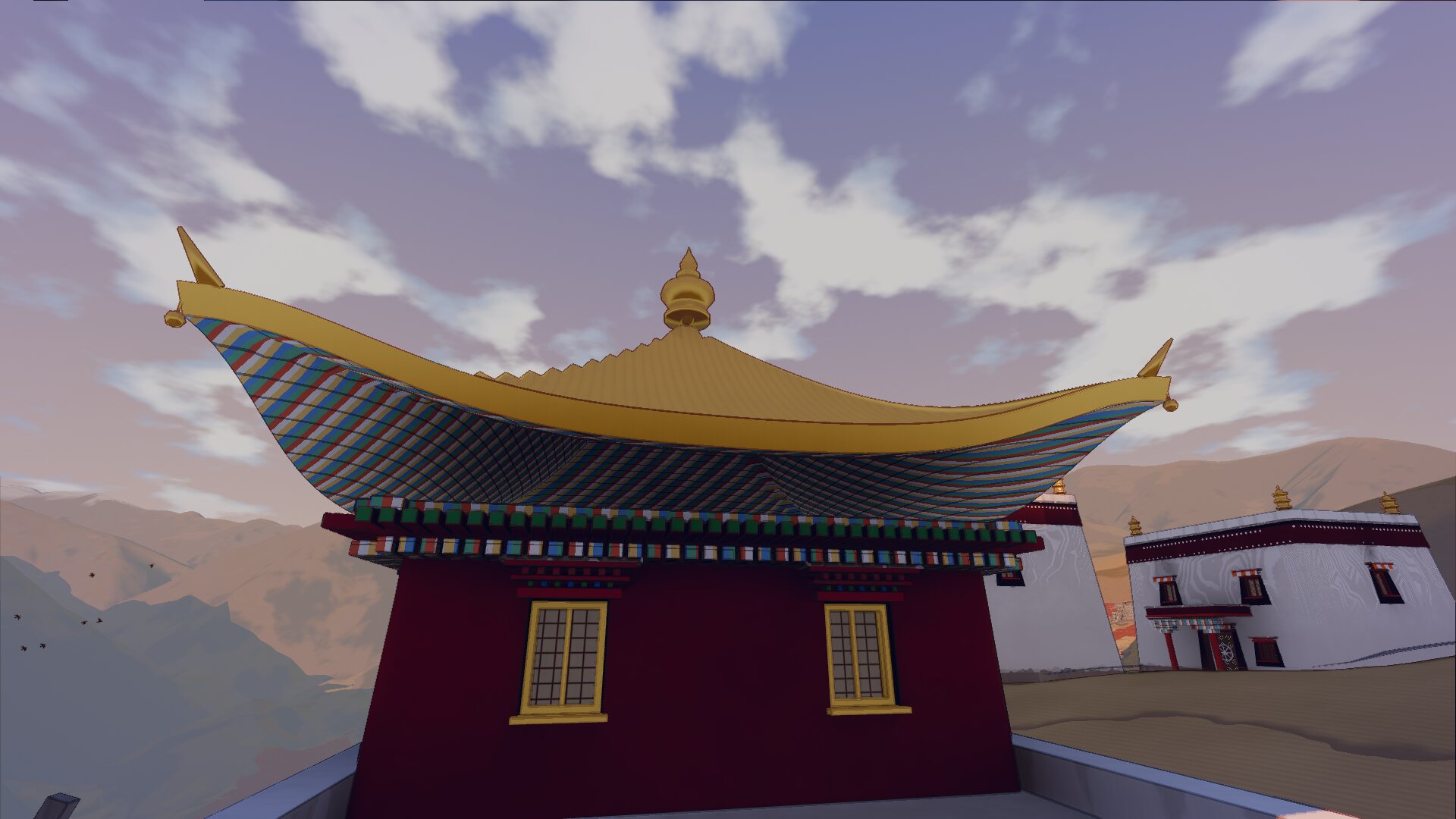
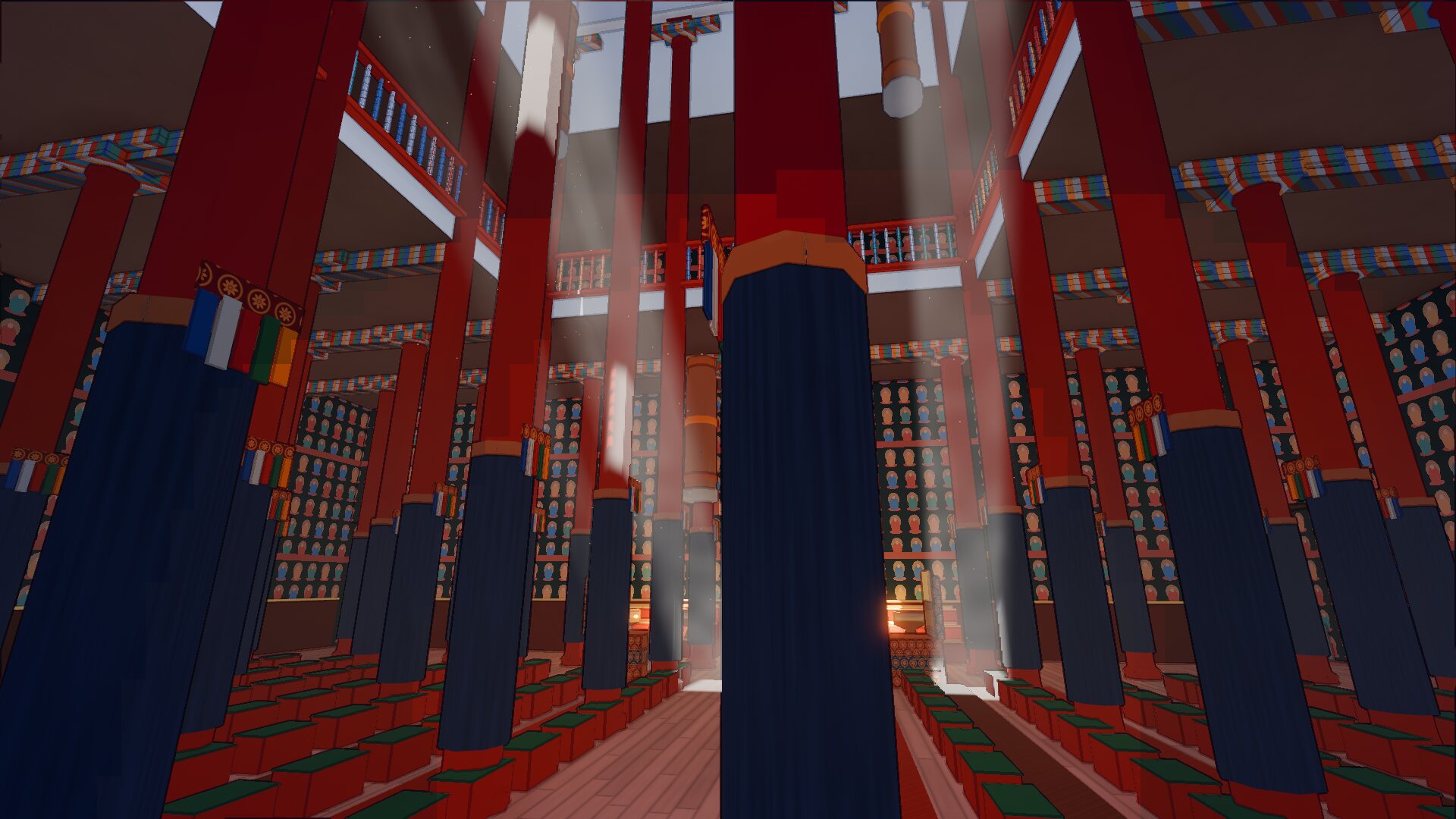
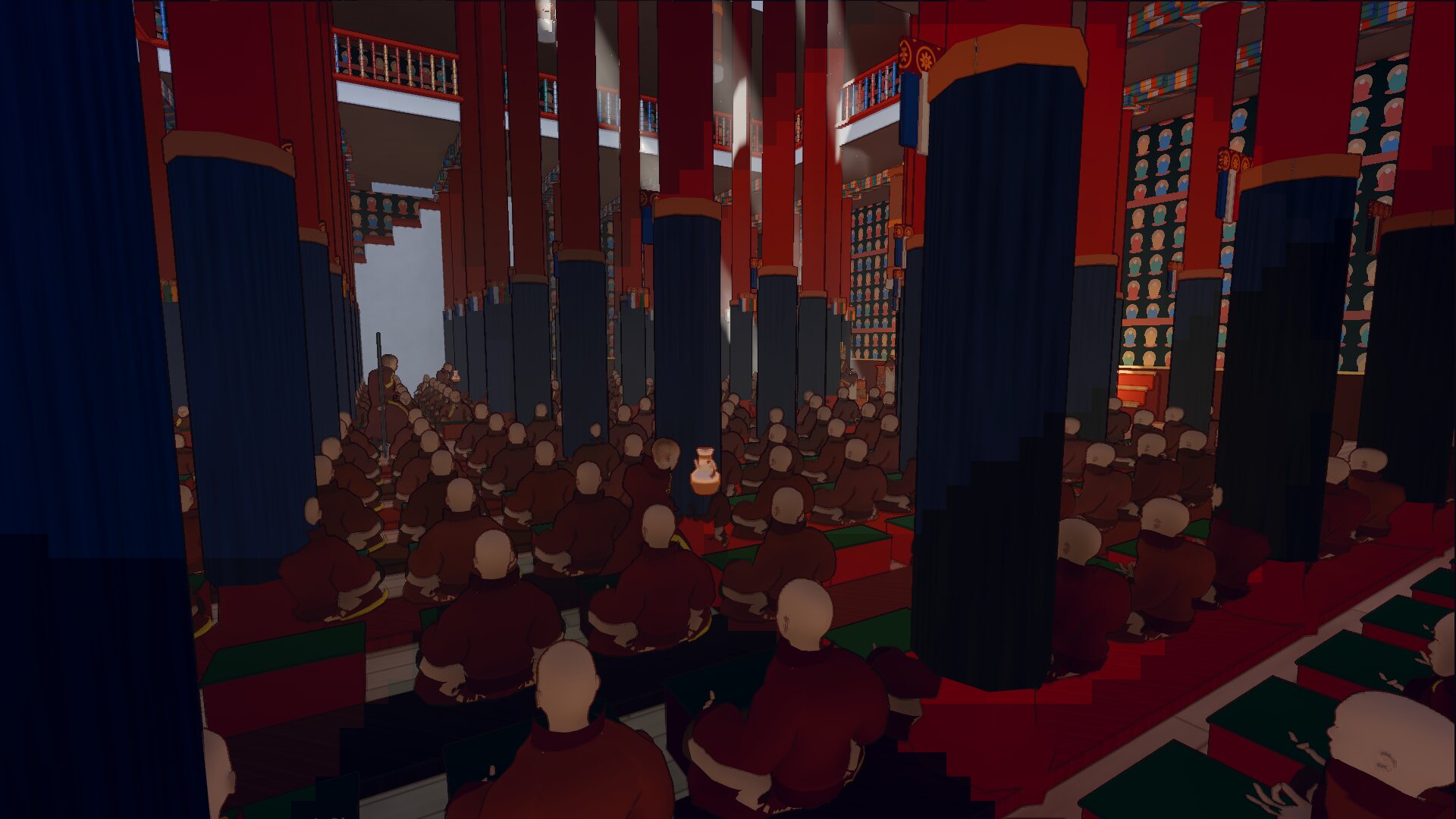
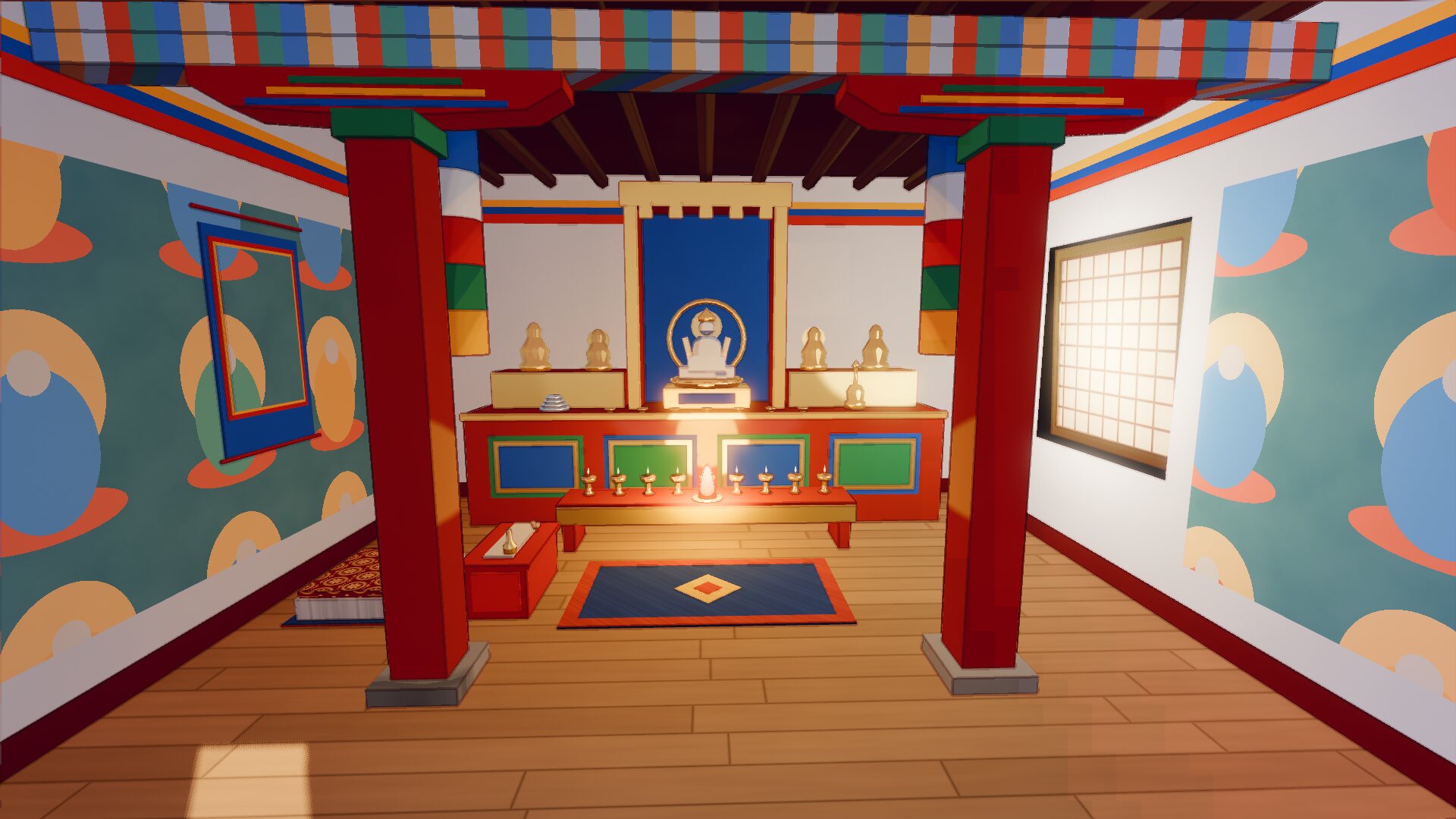
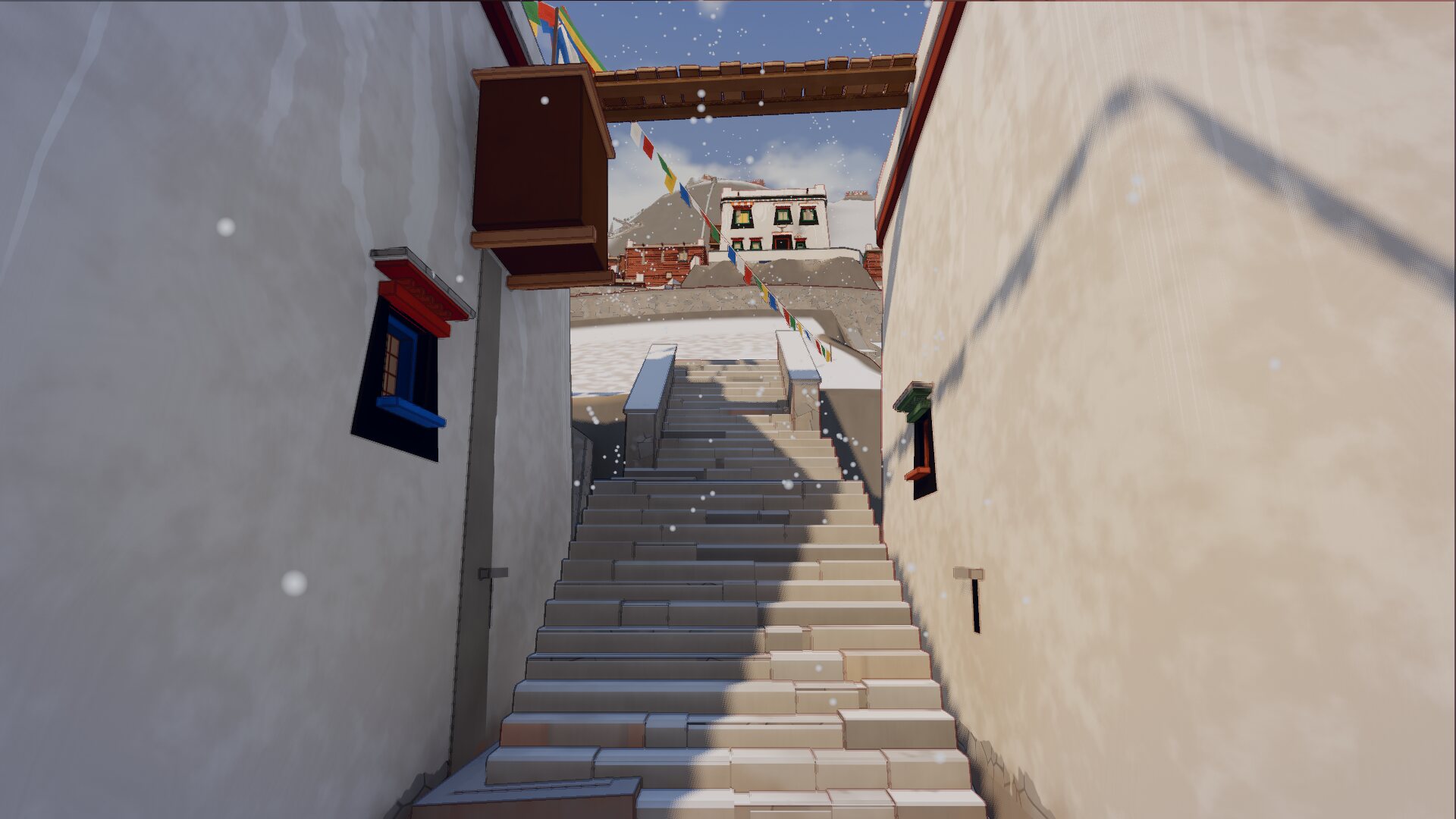
Dungkardo started as a single alley and a red chapel and grew into a terraced town on a real mountainside: flat roofs joined by notched-log ladders, a market square, a monastery up 1,080 steps, painted interiors, and townspeople and monks who keep their own hours.
The look is painterly rather than photoreal, and I wrote the shaders for it: soft two-tone light, toon highlights, rim light and screen-space ink lines, with a painted sky and prayer flags, grass and foliage moving in the wind.
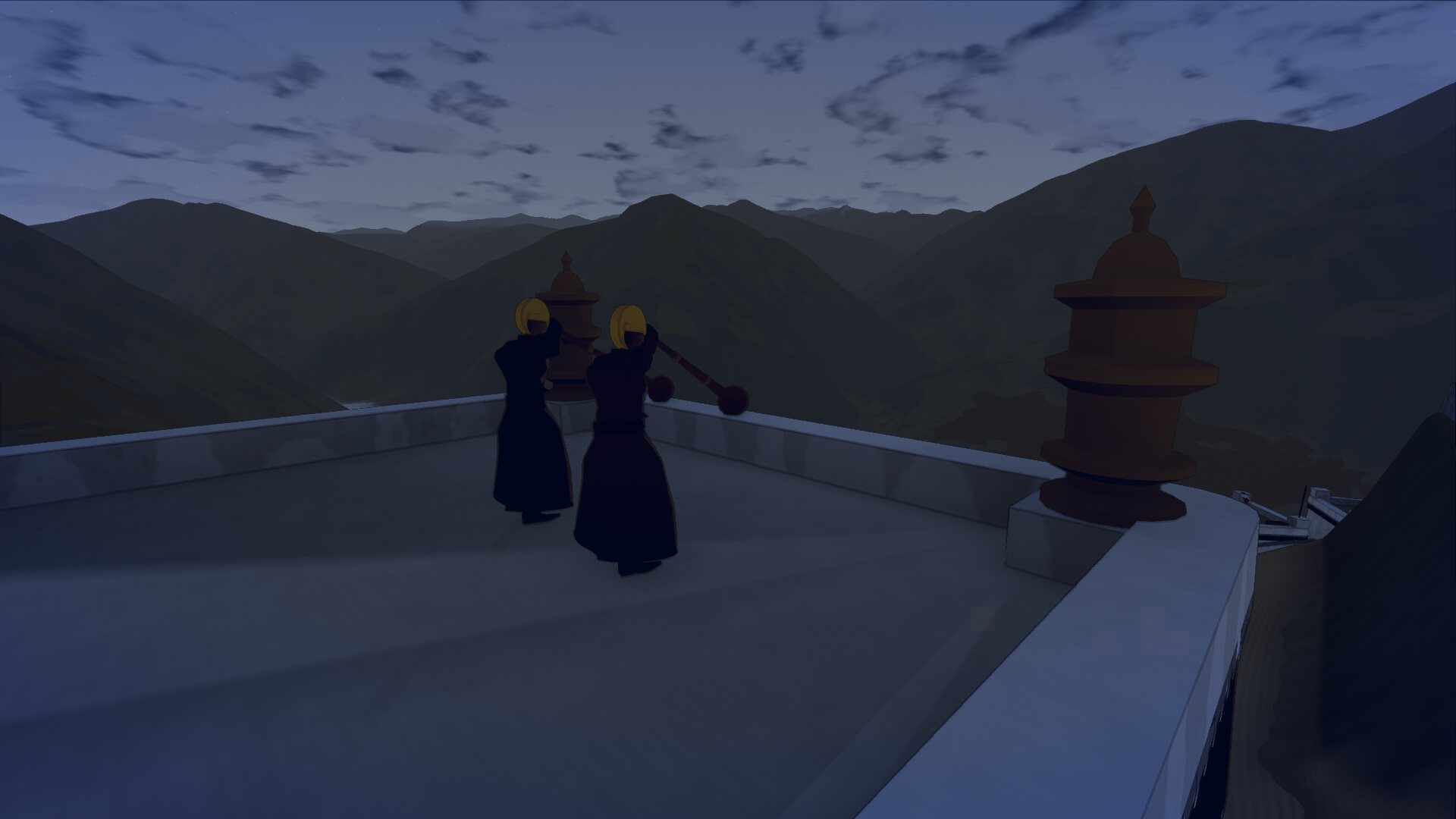
The town runs on its own clock. The sun and moon follow a 1903 Tibetan and Chinese calendar, lamps are lit at dusk, the monastery horns sound at dawn, and the townspeople, novices and monks go about their days, to market, to assembly and home again.
Making a whole valley run smoothly on a MacBook was the real work. The terrain is built from public elevation data by a Python pipeline, the buildings come from my own Blender kit with three levels of detail, interiors stream in as you reach their doors, and crowds are drawn with vertex-animation textures. Unit tests, scripted walks over every route and still frames compared against references keep it from breaking as it grows.
IN PICTURES